
Jake White
And why South African's love the set piece
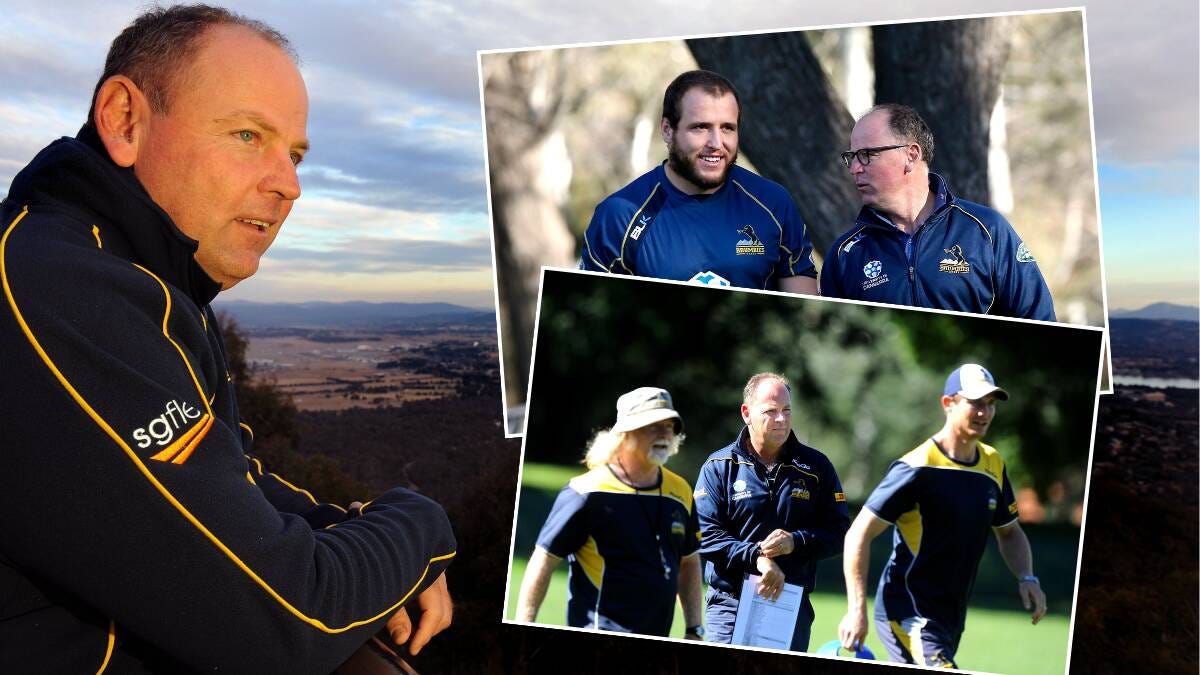
Recently, I shared about how Jake White was the architect of my favourite environment in rugby, the 2012-13 Brumbies.
He assembled an amazing group of staff, and I learned something from all of them.
But there’s one lesson from Jake that’s stuck with me more than any other.
One day we were in a team meeting watching footage from the weekend’s game when one of the backs missed a tackle.
Normally a coach would point to the tackler’s technique or commitment and say something like:“Your shoulders in the wrong spot” or “You gotta hit harder”.
But Jake paused the footage and said:
“Boys… you are not seeing the full picture.”
Then he rewound the film.
“The defender missed the tackle because he had to move late to his right. And he had to do that because the defender inside him was late into position.”
(For non-rugby fans: the best tackles happen when defenders can move straight off the line. But you can only do that when the players beside you are in the right spot.)
Jake rewound it further.
The inside defender had been late because he had gotten sucked into a ruck he shouldn’t have gone to.
But why?
Jake rewound it again.
He’d gone to the ruck to help complete a tackle. And he had to do that because the person who was supposed to make the tackle was slow getting off the back of a lineout.
Then Jake rewound it one more time to show that the player was slow to leave the lineout because he was covering for another player who’d missed his role.
And the player that missed his role at the lineout was me.
The defender was getting blamed for the missed tackle.
But the real issue had happened three phases earlier.
I was usually pretty good with remembering my roles. But I hadn’t slept well that week and my brain felt slightly off.
Not enough for anyone to notice.
But enough to create downstream problems for the team.
And that was Jake’s gift as a coach. He always looked upstream.
Which meant that he didn’t just fix the missed tackle. He fixed the thing that caused the missed tackle. Because he knew that when you solve the problem at the source, the downstream mistakes often disappear.
I think this is why South African rugby is obsessed with winning the set piece. Because if you dominate there, everything downstream tends to flow, and you often win.
(For the non-rugby fans: the set piece is how the game restarts if you drop the ball and it goes forward, or it goes out of bounds.)
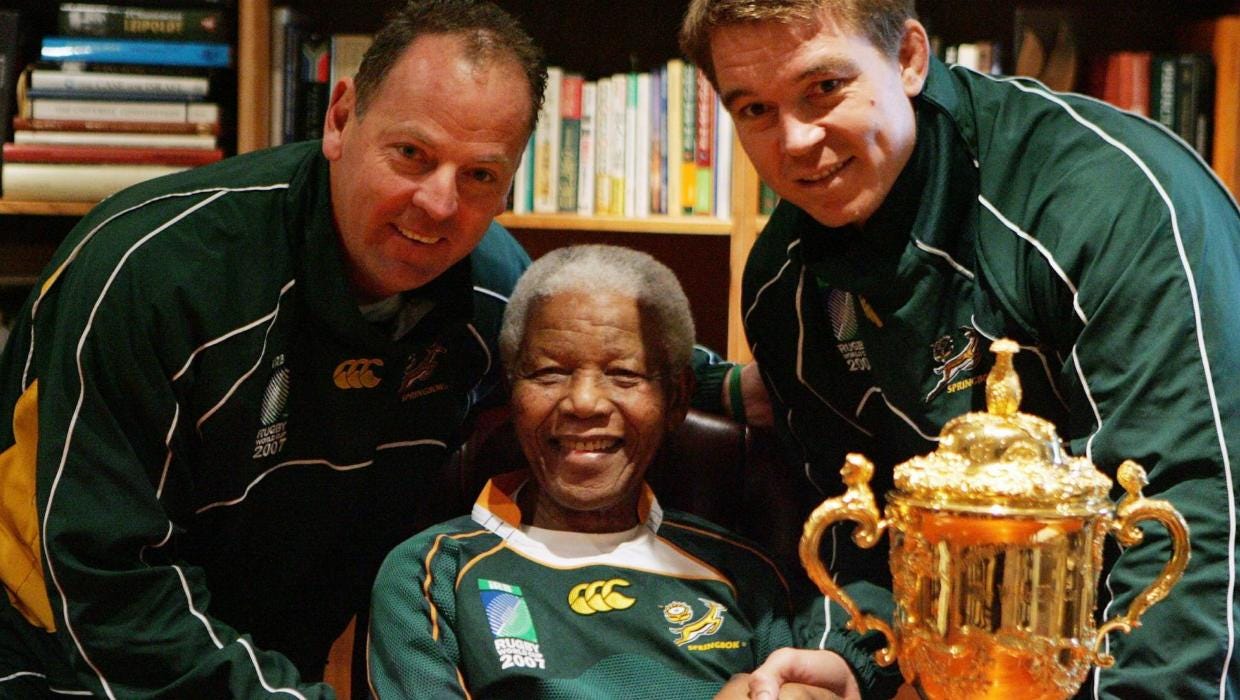
That lesson has stuck with me and now I often think:
What is the set piece in my own life?
With work, the upstream issue is often clarity. If I’m clear about what I’m trying to do, then everything else tends to flow.
But if I zoom out even further, I can see that the upstream issue for most of my life is actually my health and energy.
Becaue if I’m sleeping well, exercising, eating properly, and just generally taking care of myself, everything downstream works better.
My thinking is clearer. I make better decisions. I’m more patient. And I just generally show up better for my work and kids.
And when I’m not looking after myself?
I push harder, become reactive, and I miss tackles.
Most people try to fix the missed tackle.
But very few go back three phases earlier.
Thank you Jake.
Great piece. Getting to the root cause takes longer but the results are much more positive
Really enjoyed reading this piece and the lesson resonates. It’s being able to zoom right out and look at the full picture that helps us really see, observe and understand what’s going on and where we need to course correct. Being able to do that for oneself takes a lot of practice and I think is possibly one of the highest and most challenging parts of ‘self coaching’